


Most venture capital investments do not become spectacular successes.
A fund can survive a long list of disappointments if it owns one or two companies that become genuinely exceptional. The losses are limited to the amount invested. The upside, at least in theory, is far greater.
I have decided to test a miniature version of that model.
My investment committee consists of ChatGPT, Claude and Gemini. There are no institutional investors, private-company meetings or million-pound cheques.
My starting capital comes from selling old cameras, collectibles and other things that have been gathering dust in the attic.
Each month, the three AIs will independently select one publicly listed company with the potential to deliver an unusually large return over the next decade.
Each AI gets £10 & each company gets ten years to hopefully grow.
The individual investments are deliberately tiny. Some will almost certainly perform badly. A few may become worthless. That is built into the experiment.
The objective is not to be right every month.
It is to make enough carefully researched, limited-downside bets that I have a chance of owning one or two genuine outliers.
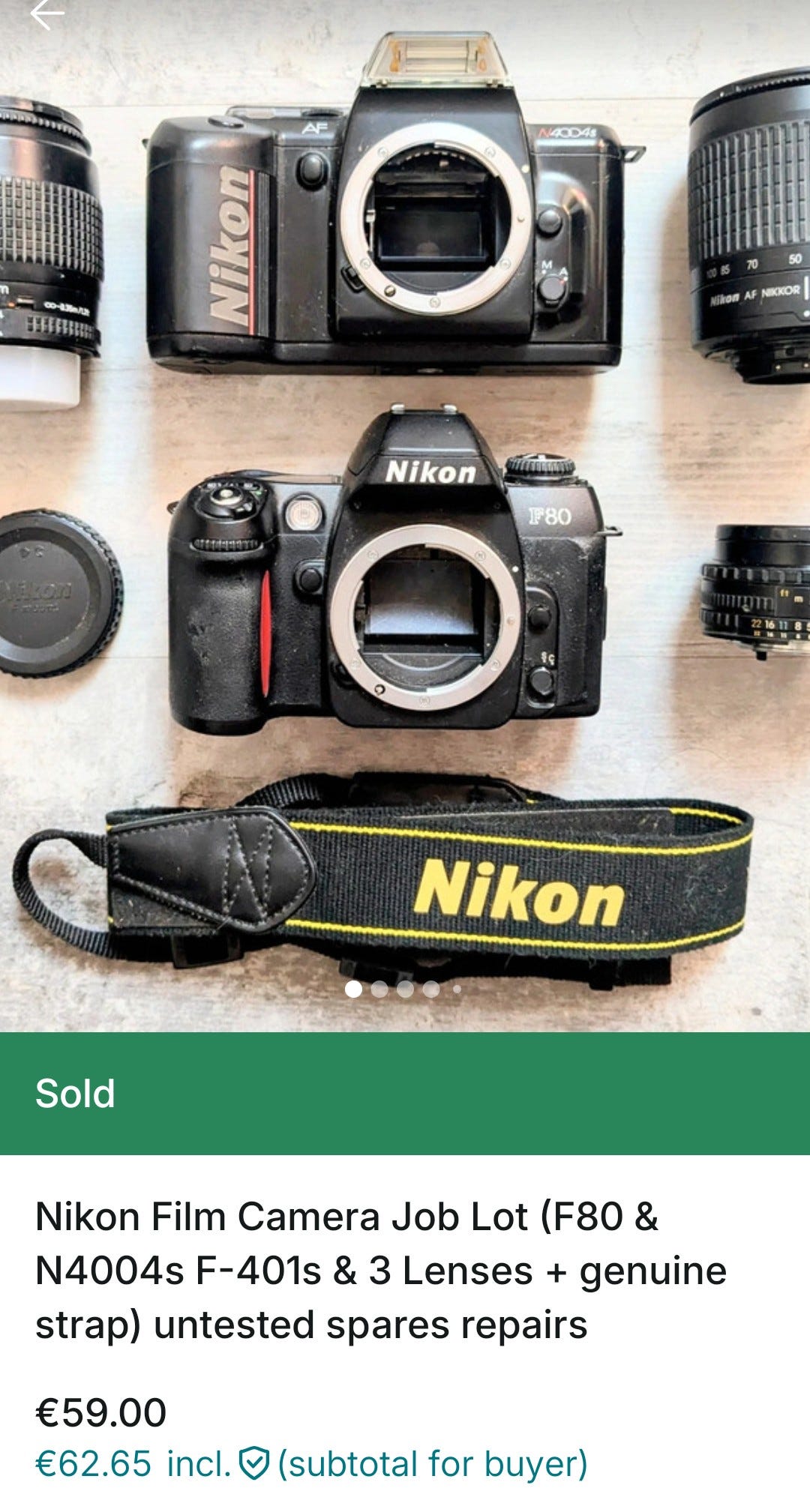
The attic is the first investor
I am not funding this project from household income, business cash or long-term savings.
Every month, I will sell something I no longer use and invest £30 of the proceeds: £10 for each AI’s selection.
The first month was funded by a Nikon film-camera job lot that sold on Vinted for €59 — a little over £50 at the time.
One forgotten item was therefore enough to cover the full monthly investment.
Even though the sale raised more than £30, I will still sell something different next month. The habit is part of the project.
Any money left over after the three £10 investments will be gradually added to my Bitcoin position.
A public-market version of venture capital
This is not technically a venture capital fund. The companies are publicly listed, and the investments are being made through a normal brokerage account.
But the thinking is deliberately venture-style.
Traditional investing often starts with preservation: diversify carefully, reduce volatility and avoid permanent losses.
Venture investing accepts a different reality. Individual failures are expected. What matters is keeping each loss manageable while maintaining exposure to companies capable of producing disproportionately large returns.
A £10 investment can lose no more than £10.
But if one of those businesses eventually becomes ten, twenty or fifty times more valuable, it could contribute far more than its original weight in the portfolio.
That does not make speculative investing safe. It makes position sizing essential.
I am not trying to identify one perfect company and place a large bet on it. I am creating repeated, low-cost opportunities to own something exceptional before its importance becomes obvious.
The three AI fund managers
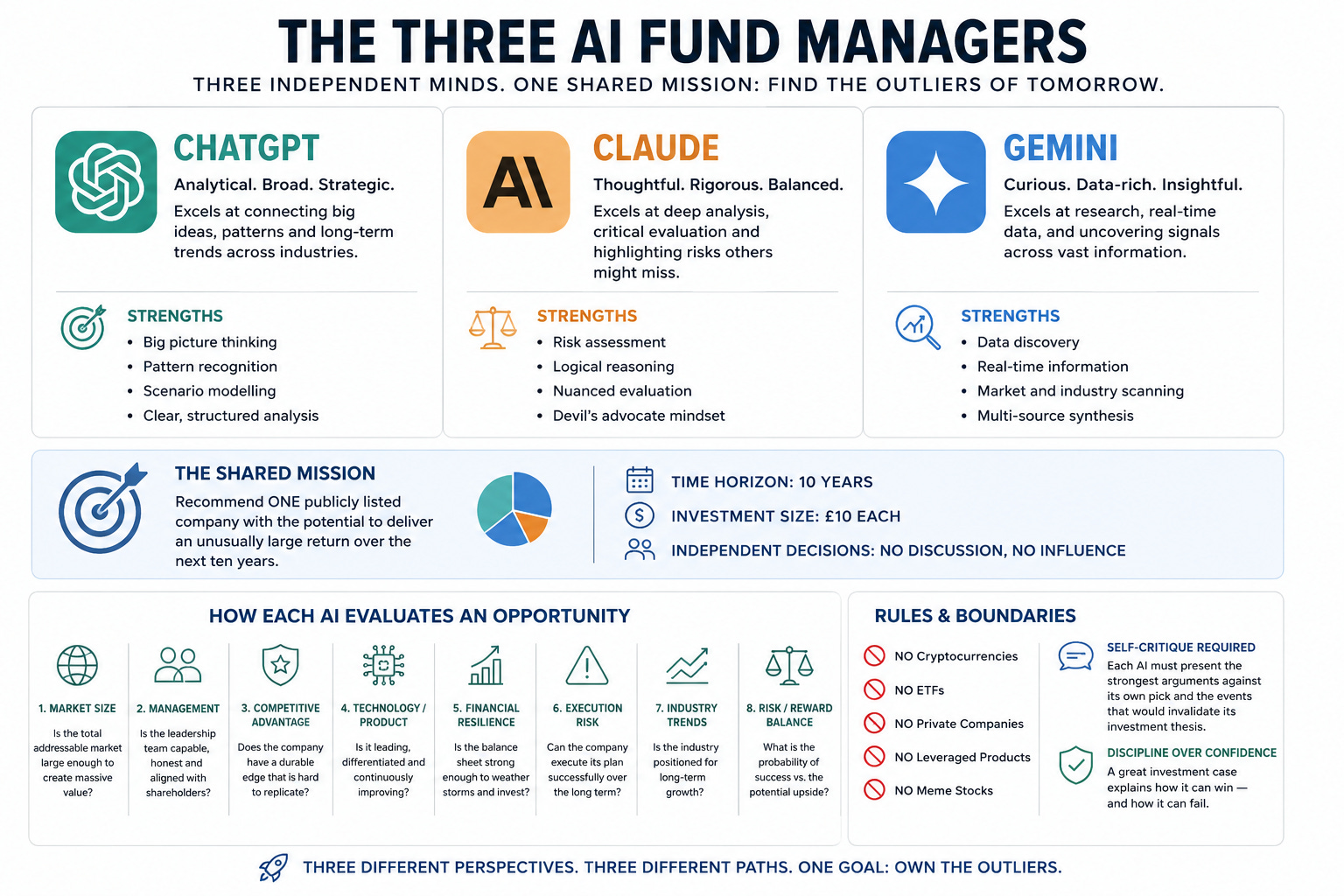
The experiment uses three AI models:
ChatGPT
Claude
Gemini
Each receives the same prompt and independently recommends one publicly listed company.
The models are not being asked which stock might rise next week, or which company currently has the most enthusiastic analyst ratings.
They are being asked to think over ten years.
Each recommendation must have a credible path to becoming a much larger business, while still being grounded in a realistic assessment of its market, management, technology, finances and ability to execute.
The AIs must evaluate:
the size of the potential market;
management quality;
competitive advantage;
technology or product leadership;
financial resilience;
execution risk;
long-term industry trends;
and the probability of success relative to the potential upside.
(Cryptocurrencies, ETFs, private companies, leveraged products and meme stocks are excluded.)
The models must also explain the strongest arguments against their own choice and identify the events that would invalidate the investment thesis.
That matters.
Producing a confident argument for buying a company is easy. A serious analysis must also explain how the idea could fail.
I used the three AIs to build the prompt
One of my favourite parts of the project is that I did not simply ask three chatbots for three stock tips.
I used all three AIs to help design the experiment itself.
The original idea was loose: ask ChatGPT, Claude and Gemini to choose one high-upside company every month, invest a small amount in each and compare the results.
From there, I used the models to challenge and refine the structure.
Should the investment horizon be five years or ten?
Should the objective be maximum theoretical upside, or the best probability-adjusted asymmetric opportunity?
Should duplicate recommendations be allowed?
Should the AIs be permitted to keep adding to an existing favourite, or should they be forced to find new companies?
How should risk, financial runway and failure conditions be addressed?
The models did not always agree, which made the process better. I could compare their arguments, reject weaker suggestions and gradually make the rules more precise.
The result is not a vague prompt asking for “the best stock”.
Each AI is effectively being asked to behave like a venture capital manager who can invest only in public companies and whose performance will be judged after ten years.
I like that AI is involved not only in choosing the investments, but also in constructing the system used to choose them.
AI massively reduced the research time
Researching three unfamiliar companies properly every month could easily become a second job.
I would normally need to work through company reports, investor presentations, revenue figures, balance sheets, management histories, market estimates, competitors and technical risks before feeling that I understood even the basic investment case.
The AIs dramatically reduce the time required to get there.
They can quickly:
identify relevant companies;
explain unfamiliar business models;
summarise the central investment thesis;
compare competitors;
highlight financial and execution risks;
identify weaknesses in their own arguments;
and organise the information into a consistent format.
That does not make the research infallible.
AI can misunderstand information, overlook important details, rely on outdated claims or construct a convincing argument for a bad investment.
I still need to use judgement and verify anything important.
But as a research assistant, AI changes the economics of the process. It removes much of the slow, repetitive work involved in moving from knowing almost nothing about a company to understanding its core opportunity and main risks.
Without that assistance, researching three new asymmetric opportunities every month would probably require more time than a £30 experiment justified.
With AI, the process becomes manageable, repeatable and interesting.
AI does not remove the need to think.
It reduces the time required before useful thinking can begin.
The rules
Each AI receives £10 a month.
For at least the first six months, every funded company must be new to the experiment.
That should create up to eighteen individual positions before I review the structure.
If an AI’s highest-conviction company has already received an investment, that preference will still be recorded. The AI must then provide its strongest eligible alternative for that month’s funded position.
After six months, I will decide whether to:
continue requiring completely new companies;
allow the AIs to add to their strongest previous selections;
or use a mixture of new ideas and repeat investments.
No company will be sold simply because its share price falls.
These are ten-year recommendations. Judging them after a few weeks or months would defeat the purpose.
The portfolios will be reviewed after one year, but that will only be an early checkpoint.
The more meaningful comparisons will come after three, five and eventually ten years.
The opening round
The first three funded companies are:
ChatGPT: Rocket Lab
Rocket Lab is a space infrastructure business involved in launch services, spacecraft and wider satellite systems.
Claude: Astera Labs
Astera Labs develops semiconductor-based connectivity products designed to address data-transfer bottlenecks inside AI data centres.
Gemini: AST SpaceMobile
AST SpaceMobile is attempting to build a satellite network capable of delivering mobile broadband directly to ordinary smartphones.
The opening round immediately created an interesting problem.
Claude’s original first choice was also Rocket Lab.
I could have invested £20 into Rocket Lab and preserved the first recommendations exactly. Instead, I recorded Claude’s selection as a duplicate conviction signal and asked for its highest-conviction alternative.
That was Astera Labs.
Funding the alternative gave the opening portfolio three separate positions rather than placing two-thirds of the first month’s capital into one company.
It also created a more varied starting point across space infrastructure, satellite communications and AI data-centre technology.
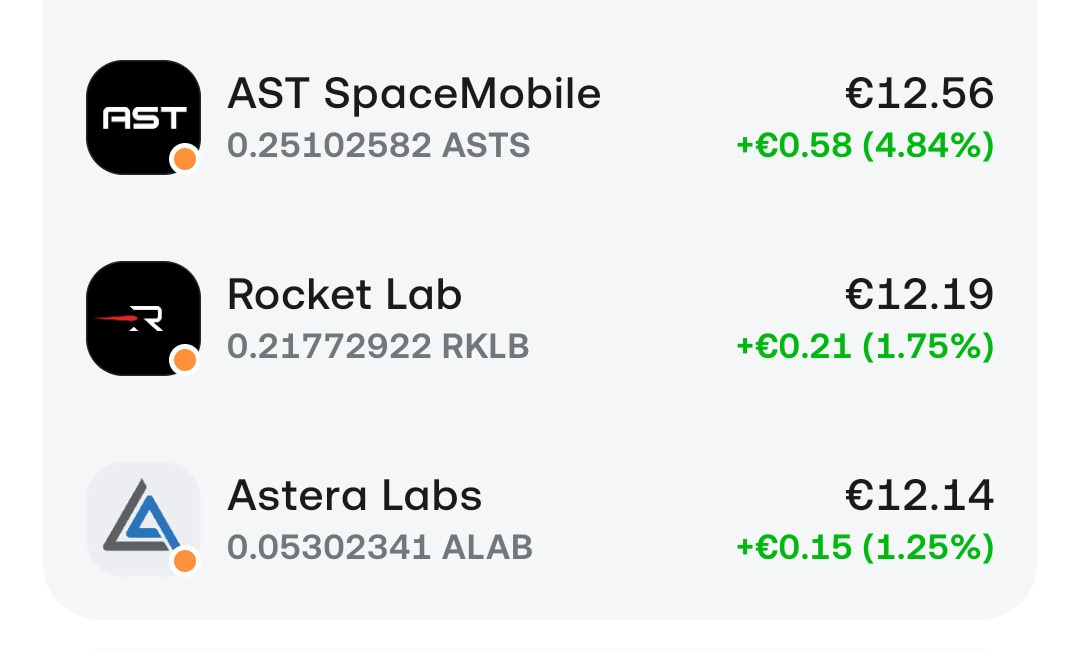
Month one funded: €12 each into Rocket Lab, Astera Labs and AST SpaceMobile. The short-term movement is irrelevant; the experiment is designed to run for ten years.
AI cannot predict the market
I am not assuming that AI can predict the stock market.
No model knows which technologies will succeed, which management teams will execute or what investors will eventually be prepared to pay for a company.
A sophisticated explanation can still lead to a terrible investment.
That uncertainty is part of the experiment.
Over time, I want to see:
which industries each AI repeatedly favours;
how their reasoning differs;
whether they identify opportunities before they become obvious;
whether they become distracted by fashionable narratives;
how honestly they assess risk;
and whether one model eventually builds a stronger portfolio than the others.
There will almost certainly be failures.
Some companies may fall by 80 or 90 per cent. Some may repeatedly dilute shareholders. Some may never turn impressive technology into a viable business. A few may disappear entirely.
That is acceptable because the individual investments are deliberately small.
The portfolio does not need every choice to succeed.
It needs the losses to remain contained while the winners are given enough time and space to become meaningful.

What success might look like
At £30 a month, the project will invest £360 a year.
Over ten years, that would amount to £3,600 in contributions before any gains or losses.
That alone is unlikely to transform my financial life.
But that is not really the point.
The project is about creating disciplined exposure to unusual opportunities, documenting the reasoning and giving genuine outliers time to emerge.
Success could take several forms.
One company might become an exceptional long-term investment.
One AI might consistently make stronger decisions than the others.
The experiment might reveal that certain sectors repeatedly produce more convincing asymmetric opportunities.
It may show how AI investment reasoning changes as the models themselves improve.
Or it may simply demonstrate that small, structured actions can turn forgotten possessions into a growing collection of productive assets.
Even failure would produce useful information.
After several years, I should have a clear record of what each AI believed, why it believed it and what actually happened.
A public record
I plan to document the experiment as it develops.
Each monthly update can include:
what I sold to fund the round;
which company each AI selected;
why it selected it;
the strongest argument against the investment;
the amount invested;
and the performance of each AI portfolio.
The project should become more interesting with time.
A one-month result means almost nothing.
After three years, patterns may begin to appear. After five years, some business models will have succeeded and others will have broken down. After ten years, the experiment should have a meaningful conclusion.
For now, it begins with three AIs, three companies and £30 recovered from things that were gathering dust.
The attic has effectively become the first investor in my miniature venture fund.
That feels like a worthwhile trade.
A final note
This is a personal experiment and a record of my own decisions.
It is not financial advice, and none of the companies mentioned should be treated as a recommendation to buy, sell or hold any investment.
These are speculative companies with a genuine possibility of substantial losses, including the complete loss of individual positions.
Anyone considering an investment should conduct their own research and make decisions based on their own circumstances, objectives and tolerance for risk.
Sounds like a fun project J!